Finding Niche Market Keywords That Small Sites Can Win
On this page
- Start with a seed topic that comes from buyers, not just brainstorms
- Use tools to expand the list, then pull language from the places buyers hang out
- The fastest win is usually a micro-niche, not the niche itself
- Volume and difficulty matter, but only after you check whether the term fits the business
- Read the live results page like a market analyst before you commit a single page
- Turn keyword research into pages with a simple intent and page-type map
- Track the keywords after publishing, not just before
- When the tools say zero volume, validate the niche with first-party evidence
- Build your shortlist this week, then watch how search and AI actually talk about your brand
Key Points
- Start with buyer language from calls, reviews, forums and support instead of internal jargon.
- Expand seed terms with tools, then refine them using autocomplete, reviews and community questions.
- Win faster by targeting micro-niches that match a specific audience, use case and business offer.
- Prioritize keywords by relevance, intent, competition and monetization before you trust volume estimates.
- Map each term to the right page type, then measure rankings, AI mentions, cited sources and share of voice.
Most people treat finding niche market keywords like a volume contest. The market does not work that way. In Google’s 2023 U.S. Economic Impact Report, the company says its services helped provide $739 billion in economic activity for millions of American businesses, which is a blunt reminder that discoverability still moves money when the right buyer is searching.
The clicks are not spread evenly either. Backlinko’s organic CTR research shows how heavily attention concentrates at the top of the page and its supporting notes say fewer than 1% of searchers reach page two. Broad head terms can soak up months of work while smaller sites fight for scraps.
The search itself is changing. In SparkToro and Datos’ 2024 U.S. zero-click study, only 360 of every 1,000 Google searches sent a click to the open web. A lot of searches end on Google, shift to another platform, or get refined into something narrower. That is another reason to filter every list by business fit, audience language plus intent instead of chasing vanity volume.
Google has now rolled out a generative AI performance report in Search Console that shows impressions from AI Overviews and AI Mode, which tells you straight out that visibility can appear inside the answer as well as in classic blue links. We are also seeing more teams ask not just where they rank but which prompts surface their brand and which cited sources keep showing up beside them.
Referral patterns are shifting too. BrightEdge reported that Gemini became the No. 2 consumer AI referral source in Q1 2026, while ChatGPT still led the category.
That lines up with what we cover in why SEO alone won’t save your business in 2026: brands now need to understand classic search visibility, how AI systems describe them, which sources they trust, plus what questions trigger that visibility.
Start with a seed topic that comes from buyers, not just brainstorms
Niche keyword research is just the practice of turning a real buying conversation into the exact phrases people type. Start before the tools. Pull language from customer interviews, sales emails, support tickets, reviews, Reddit threads, YouTube comments, industry Slack groups plus category labels used by competing brands. The question our customers ask most is not “what has the most volume?” It is “what do buyers actually say when they are trying to solve this problem?”
A quick example makes the point. A founder may call the product “trust automation orchestration” in the deck, then hear prospects ask for “SOC 2 evidence collection for startups” on calls. That buyer phrase is the seed. The same thing happens in consumer markets. “Home coffee” is too broad to guide a page, but “1zpresso hand grinder travel case” points to a product, a use case plus a shopper who already narrowed the field.
Write down five to ten seed phrases plus adjacent problems, use cases, jobs to be done plus modifiers such as for beginners, for small business, near me, template, software, alternatives, pricing and vs. That simple exercise is how to find niche keywords without fooling yourself with internal jargon. It also prepares you for the rise of GEO, where plain buyer language often performs better than branded language because AI systems paraphrase queries in the customer’s own terms.
Use tools to expand the list, then pull language from the places buyers hang out
Once the seed list is real, turn it into a working set. Use tools for expansion, then use communities and reviews for translation. The tools give you shape. Buyers give you wording.
Google Keyword Planner is best for advertiser phrasing plus rough demand. It helps you see which modifiers cluster around money terms like pricing, software, cost plus service.
Google Trends is best for seasonality and breakout topics. It is especially useful when a phrase looks small in a tool but interest is clearly climbing.
Ahrefs and Semrush are best for keyword variations, parent topics plus fast snapshots of the live results page. They help you see whether you are looking at one topic or three topics pretending to be one.
Ubersuggest is a lighter option when you need quick expansion without a full enterprise workflow. It is fine for early passes and sanity checks.
AlsoAsked is great for question trees. It shows how a buyer’s first question branches into follow-up questions that can become subheads, FAQs, or supporting pages.
KeywordTool and other autocomplete scrapers are useful when you want modifiers at scale. They are good for phrases like best, for small business, for seniors, template, checklist, pricing plus alternatives.
Amazon, Etsy plus platform search bars are gold for product niches because they reveal shopper wording. If you are figuring out how to research keywords for a Kindle niche, start with Amazon autocomplete, KDP subcategory names, bestseller subtitles plus the exact phrases readers use in reviews. Then go pull language from the wild. Pull terms from Google autocomplete, People Also Ask, related searches, Reddit titles, Quora, G2 or Capterra reviews plus internal site search if you have it. That is where you find the phrases tools miss, especially in B2B and technical markets. We keep seeing useful terms show up first in reviews or forum post titles, then months later in third-party tools. If you want a broader stack after the core research step, our roundup of AI search tools for 2026 is a practical next read.
The fastest win is usually a micro-niche, not the niche itself
Most small sites do not win by targeting the category. They win by narrowing the category until the page matches a buyer’s exact situation. A micro-niche usually follows one of three formulas: audience plus problem plus context, product type plus use case plus modifier, or industry plus workflow plus tool. “Project management software” becomes “project management software for architecture firms.” “Meal prep” becomes “high-protein meal prep for truck drivers.” The query is longer, but the competition set is smaller and the searcher is further along.
That is why niche keywords often convert better. The buyer has already removed half the options before clicking. Still, business fit matters more than novelty. A weird low-volume phrase is not valuable if it does not connect to revenue, margin, or a repeatable offer. When we profile brands in how businesses are winning with GEO, the pages that hold up best are usually narrow pages tied to an actual service line, product category, or comparison moment.
Volume and difficulty matter, but only after you check whether the term fits the business
The cleanest prioritization method uses four filters in this order: relevance, intent, realistic authority fit, then demand. Relevance asks whether the term maps to your offer. Intent asks whether the page can satisfy the searcher. Authority fit asks whether your site can plausibly compete with the domains already showing up. Only then should you look at search volume, trend line, business value plus keyword difficulty. This is how to research keywords for a niche without ending up with a beautiful list of terms that does nothing for the business.
A simple scoring model works well. Score each term from 1 to 5 on relevance, intent match, competitiveness plus monetization. Take “cybersecurity software” versus “SOC 2 evidence collection for startups.” The first term may have much higher volume, but a newer SaaS brand could score it 2, 2, 1 and 3 for a total of 8. The second term might score 5, 5, 3 and 5 for 18. Lower volume wins because it maps cleanly to an offer and to a page the brand can actually publish well.
Treat zero-volume numbers carefully. Many useful niche keywords show as tiny or nonexistent because third-party panels are small, fresh language lags and technical phrases get grouped badly. That is normal in niche SEO. Use volume as a directional clue, not a judge.
Read the live results page like a market analyst before you commit a single page
Before you build anything, read the current results page with a hard eye. Start with domain mix. If the top ten is all government sites, giant marketplaces, or category leaders with deep topical libraries, that is a different fight than a page with smaller specialists. Then check page type. Are you seeing product pages, comparison posts, videos, forum threads, local packs, image packs, shopping results, or question boxes? The page type tells you what Google thinks the job is.
Next, look for beatability signals. Reddit or forum threads in the top results can mean the engine is still looking for firsthand discussion. Reddit’s Hidden B2B Journey report says more than 200 million unique Reddit posts are clicked from Google search results, which helps explain why community-heavy results keep appearing for high-consideration queries. Also watch for thin listicles, outdated screenshots, exact-title mismatches, or pages ranking with only partial intent coverage. Those are openings. Fresh results with recent dates, lots of video blocks, or local pack leakage usually mean the space is more demanding than the tool score suggests.
We also inspect the top pages for content depth, internal linking patterns, author expertise plus how tightly the whole site covers the subject. That produces a practical decision: lower competition when smaller sites rank and intent is messy, possible with depth when the leaders are strong but not perfect, or deprioritize for now when every result is a trusted heavyweight answering the query cleanly. If you care about AI visibility on top of search visibility, our AI Trust Score explainer helps you think about which domains large language models tend to cite when they answer those same queries.
Turn keyword research into pages with a simple intent and page-type map
The real work starts when you turn the list into pages. Informational terms belong on guides, definitions, FAQs woven into relevant pages, templates plus glossary entries. Commercial investigation terms like best, vs, alternatives, or pricing belong on comparison posts and category roundups. Transactional terms belong on product, service, or landing pages. Navigational terms support brand pages, documentation pages plus support pages. That is keyword mapping for business categories in practice.
Query pattern | Likely intent | Funnel stage | Best page type | Example |
what is / meaning | Informational | Early | Glossary or definition page | what is SOC 2 evidence |
template / checklist | Informational | Early to mid | Template or guide | vendor security checklist template |
best / top | Commercial | Mid | Category roundup | best SOC 2 automation tools |
vs / alternatives | Commercial | Mid to late | Comparison page | Vanta vs Drata |
pricing / demo / service | Transactional | Late | Landing or product page | SOC 2 compliance software pricing |
A small site architecture might look like this: one category page for “SOC 2 compliance software,” one landing page for “SOC 2 evidence collection for startups,” one comparison page for “Vanta alternatives,” plus one glossary page for “what is SOC 2 evidence.” Then add supporting articles for “startup security questionnaire template,” “SOC 2 readiness checklist,” “SOC 2 for seed-stage companies,” “how long SOC 2 evidence collection takes,” and “SOC 2 audit prep mistakes.” If you publish this way, each page has one job instead of five. When the page is written, our guide to AI search optimized blogs can help you structure it so it works for readers first plus AI retrieval second.
Track the keywords after publishing, not just before
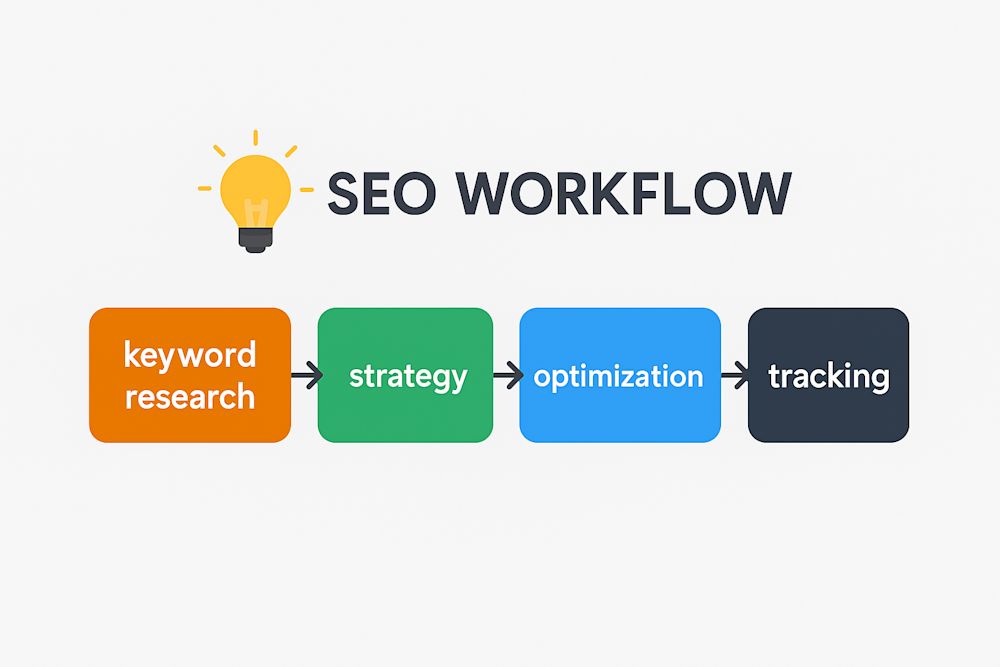
Keyword research is only useful if you can see what happens after a page goes live. Traditional rank tracking tells you whether a page is moving in search, but AI discovery adds another layer: which questions mention your brand, which answers include it, which domains are being cited and how much visibility you have compared with competitors.
This is where EasilyGeo can fit into the workflow. Instead of keeping AI visibility in a separate spreadsheet, you can use the dashboard to monitor Search Queries, AI Responses and Cited Sources alongside broader performance signals. The Overview also brings together tracked queries, average position, sessions and action items, while Share of Voice helps show how your brand visibility is distributed against competitors.
For niche keyword research, that gives you a useful feedback loop:
Track the priority queries you selected during keyword research.
Review AI responses to see whether your brand appears for those topics.
Check cited sources to understand which websites AI systems are relying on.
Compare share of voice with competitors to spot topics where they are more visible.Use action items and performance changes to decide which pages need updating, stronger supporting content or better authority signals.
The goal is not to replace keyword tools. It is to connect keyword selection with what happens after publication across both search and AI discovery.
When the tools say zero volume, validate the niche with first-party evidence
This is where first-party data beats vendor estimates. Pull search phrases from Search Console impressions, internal site search, CRM notes, call transcripts, chatbot logs, quote-request forms, sales objections, LinkedIn post comments plus support documentation searches. Google’s generative AI performance report now adds another useful layer by showing when pages appear inside AI features even when clicks are light. That matters in B2B, local services and technical markets where the best terms are specific enough to be undercounted by third-party tools.
The validation loop is simple. Collect raw phrasing from those sources. Group close variants that share intent. Build one lightweight page or one tightly themed ad group around the cluster. Watch impressions, assisted conversions, call quality plus sales feedback for a few weeks. If the language attracts qualified people, expand it into a deeper page set. If it attracts curiosity with no pipeline, kill it fast.
That is how to research keywords for a niche when the tool says zero but your market keeps saying the same phrase out loud. It is also one of the clearest paths to find niche keywords that bigger publishers ignore. After publication, our GEO habits that help pages earn citations can improve the odds that AI systems quote the page instead of just absorbing it.
Build your shortlist this week, then watch how search and AI actually talk about your brand
Here is the practical version. Choose one seed topic from real buyer language. Expand it with two tools. Narrow it to one micro-niche. Score twenty terms for relevance, intent, competitiveness plus monetization. Read the live results for the five best candidates. Map those five terms to the right page types. Then publish one page that matches the query cleanly. That is enough to learn far more than another month of spreadsheet work.
Once that page is live, measure what happens beyond rank tracking. Start with our AI visibility check, then use the EasilyGeo dashboard to keep monitoring the queries you care about, review AI responses, see which sources are being cited and compare share of voice with competitors. The point is not just to publish niche keywords. It is to learn which pages actually earn rankings, AI mentions, citations and qualified demand, then use that evidence to decide what to improve next.